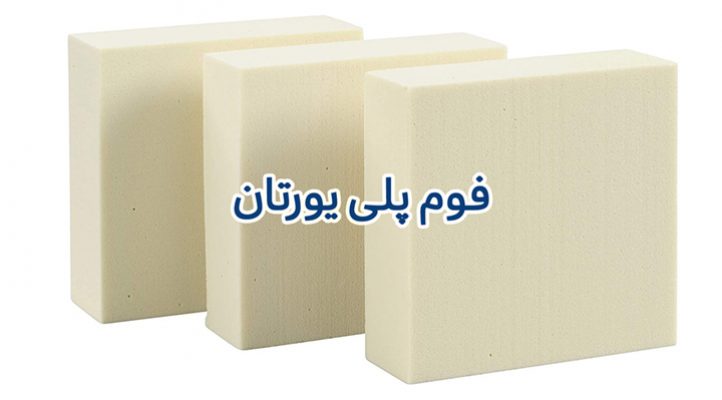
Polyurethane foam is one of the materials used in the production of sandwich panels. In this article, we will explain what polyurethane foam is and what its uses are.
What is polyurethane foam?
Polymeric materials that consist of a solid and gas phase are called plastic foams or polymer foams, which are divided into two categories: thermoplastic and thermoset foams.
Polyurethanes are formed from urethane bonds –NH-C(=O)-O-. This bond is formed by the reaction of organic isocyanate groups with hydroxyl groups, but other groups such as ether, ester, amide, etc. may also be present in the polymer molecule.
Polyurethane is known as PUR and polyurethane foam as PUR foam. These foams are divided into three different categories: rigid, flexible and semi-flexible polyurethane foam. Below we will briefly introduce each. In this study, the focus is on the properties of rigid polyurethane foam.
Specifications of soft polyurethane foam
Soft polyurethane foam has high flexibility and tensile strength due to its open-cell structure and air flow in these cells, and is therefore used in the production of various types of furniture, mattresses, and car seats.
This type of foam is resistant to various solvents, has low thermal conductivity and good sound absorption properties. Soft polyurethane foams quickly lose their color when exposed to ultraviolet radiation. These foams also have poor resistance to strong acids and bases.
Semi-soft polyurethane foam specifications
Semi-soft polyurethane foam specifications
Rigid polyurethane foam specifications
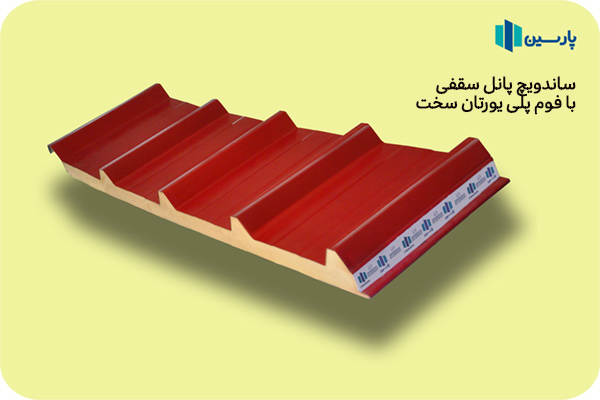
Rigid polyurethane foam has a closed cell structure and a low thermal conductivity compared to other foams and is used as insulation in sandwich-like structures. The thickness of polyurethane foam used (S) in the production of sandwich panel depends on the difference in temperature between the inside and outside environment, the rate of heat transfer (Q), and the thermal conductivity.
How is polyurethane foam made?
Rigid polyurethane foam is formed by the reaction of several different components, including:
- Isocyanate
- polyol
- Catalyst
- Bulking agent
- air
A mixture of the above-mentioned reacting materials is sprayed onto the bottom sheet of the panel through a nozzle. After increasing in volume, the rigid polyurethane foam is bonded to the top sheet and, by passing through the press section, the three-layer structure of the sandwich panel is formed. In the next stage, the formed sandwich panel is transferred to the saw section for cutting and can be provided according to the customer’s needs and requests.
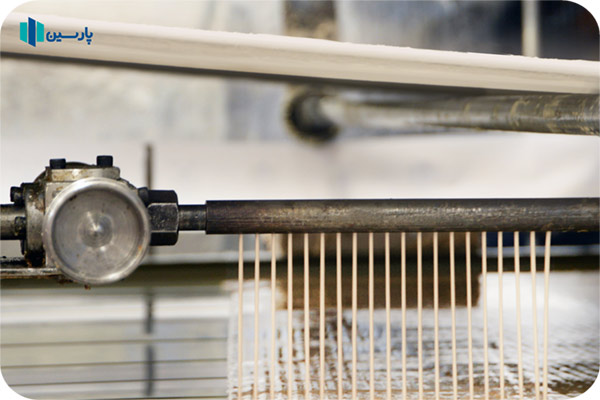
Parsin’s continuous line with a belt length of 33 meters allows for cutting sandwich panels up to 15 meters long based on customer drawings and the possibility of non-traffic transportation of cargo, optimizing transportation costs, which reduces the cost of sandwich panels for customers.
At the end of the production process, before packaging and loading the panels, in order to maintain the quality of the sandwich panel foam and prevent shrinkage and reduction in its thickness, the product temperature is brought close to ambient temperature using a cooling process to prevent sagging and reduction in the quality of the produced foam.
What is polyurethane spray foam?
In addition to being used as a sandwich panel in the walls, ceilings, and floors of various structures, rigid polyurethane foam can also be used as a spray or injection to insulate various parts of a building. Rigid polyurethane foam is formed by the reaction of polyol and isocyanate, and this foam can be sprayed onto the desired surfaces or openings. After spraying the foam material, hard polyurethane foam forms within a few minutes and the insulation of the structure is completed.
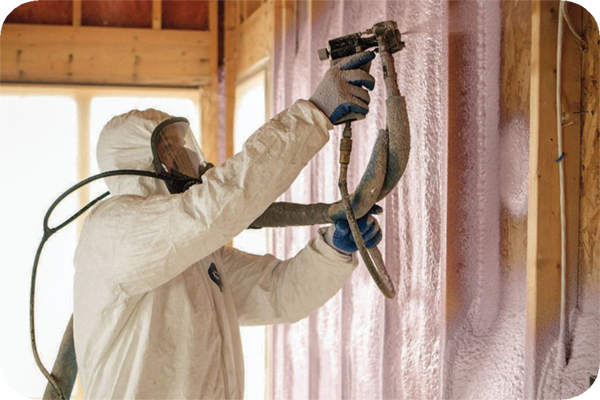
In addition to being able to independently create an insulating coating on walls or ceilings, polyurethane foam spray is also used during the implementation and installation of sandwich panels.
Thus, in the corners of the work or if there is a gap between the groove and the tongue of the sandwich panel, spray foam is used to finalize the insulation. The use of polyurethane spray foam should be carried out by an experienced and trained installation team and in compliance with the necessary standards to achieve the best results.
It should be noted that the speed of spraying and injection, the temperature of the desired surface, pressure control, and the thickness of the foam layer formed are important factors in implementation.
Polyurethane foam has special characteristics, which we will discuss below.
Polyurethane foam properties
- Low thermal conductivity
- The density of the foam used in the insulation sector is between 30 and 60. Foams with a density of 40 have the highest thermal insulation.
- High durability against atmospheric factors
- Low weight
- Various methods of implementation
- Resistance to oil, grease and non-polar solvents
- Non-absorbing water and moisture
- Impossibility of microorganisms and bacteria growing in polyurethane insulation
- Easy installation and implementation of insulated structures
- High adhesion to many types of materials such as metal surfaces, wood, etc.
(The most common polyurethane foam sheet for use in sandwich panel production is made of galvanized, aluzinc, or aluminum.)
Difference between B2, B1 and B3 types of polyurethane foam
Polyurethane foams are divided into three groups based on their chemical composition: fireproof, flame retardant, and flame retardant, which are introduced as B1, B2, and B3, respectively. B1 foam has very good fire resistance and does not burn. B2 foam (flame retardant) is self-extinguishing and exhibits good fire resistance. B3 foam has poor resistance and can ignite in a fire.
Since producing sandwich panels with B1 polyurethane foam is not economically viable in Iran and the possibility of producing it and even testing it is very limited, this product is not cost-effective for either the consumer or the manufacturer, but the possibility of producing sandwich panels with PIR foam in Iran is possible for some sandwich panel manufacturers.
This type of foam has a higher fire resistance than B2 foam, but it cannot be considered the same as B1 foam. Finally, considering the current conditions and facilities, if access to B1 or PIR panels is not possible, preparing sandwich panels with B2 foam is the best option and in most cases meets the needs of customers.
Parsin Gostar Jonoub Company, using a 5-component foam machine, is a leader in the production of various sandwich panels made of polyurethane foam with a density of 40, type B2. Therefore, the foam used has the highest level of thermal insulation, is slow-burning, self-extinguishing, and has appropriate tensile and compressive strength.