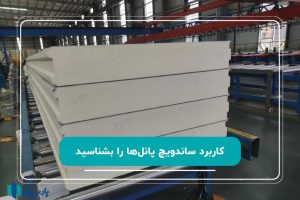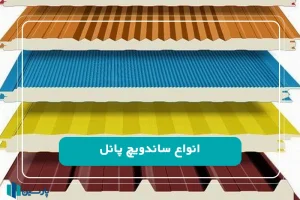
Sandwich panels are a type of modern material that consists of two main parts: an insulating core and a body covering. The type of body covering gives the sandwich panel specific characteristics and a specific application.
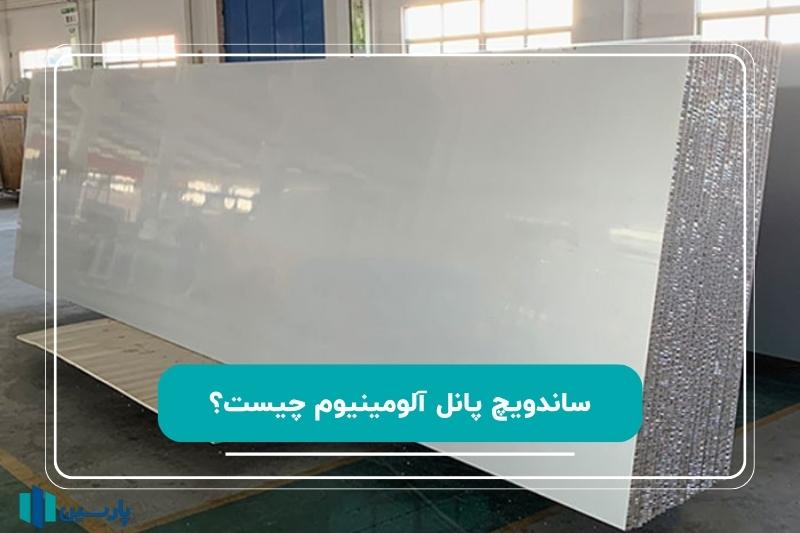
One of the types of sheets used to cover sandwich panels is aluminum. Aluminum sandwich panel is actually a prefabricated panel whose insulating foam cover is two layers of aluminum steel sheet. Usually, the aluminum is covered with a layer of baked polyester paint and a special primer.
Polyurethane insulation foam is generally used in aluminum sandwich panels. Due to their unique features, these types of sandwich panels are used in two types: wall sandwich panels and ceiling sandwich panels in various industries, including the automotive, shipbuilding, construction, etc.
As mentioned in the introduction, aluminum sandwich panels are a type of sandwich panel whose insulating foam is polyurethane and the insulating coating is aluminum. These types of panels are classified as lightweight sandwich panels. The thickness of the aluminum sheets in these types of panels is less than 0.2 mm. Among the features of aluminum panels are lightness, reasonable price, high flexibility and malleability, attractive appearance, and paintability.
Advantages of aluminum sandwich panels
The use of aluminum sandwich panels in various industries comes with some advantages. In fact, the features of this type of prefabricated panels make them a better choice compared to other panels. The most important advantages that can be considered for aluminum sandwich panels are:
Lightweight and affordable
Aluminum is a lightweight metal, and its use in sandwich panel production results in extremely lightweight products that are more cost-effective options in terms of transportation and installation. Structures made with aluminum sandwich panels are lightweight and highly durable.
non-toxic
Aluminum sheets react quickly with air and form a layer of aluminum oxide on the product. This is why aluminum panel is a non-toxic product that is widely used in the health, pharmaceutical, and food packaging industries.
light reflection
Aluminum sheets reflect light well, which is why they have high resistance to thermal and light radiation and prevent the structure from heating up.
High resistance to corrosion
The presence of an aluminum oxide layer prevents the surface of the aluminum panel from reacting to other elements and chemicals. In fact, the presence of this layer prevents the underlying layers from oxidizing or corroding in the presence of air or other chemicals after oxygen in the air comes into contact with the aluminum surface.
Flexibility and malleability
The aluminum sheet used in the manufacture of aluminum sandwich panels has high malleability, flexibility, and ductility.
Variety of colors
One of the desirable properties of aluminum sheet is its colorability. Therefore, the color variety in aluminum sandwich panels is very high.
Disadvantages of aluminum sandwich panels
- Aluminum sandwich panels are not washable and therefore cannot be easily used in hygienic industries that require sterilization.
- Aluminum has a high conductivity, which is why it is very poor at saving heat and cooling energy and is not considered a good insulator.
- There is little design variety in aluminum panels.
- The high flexibility of aluminum panels makes it a poor choice compared to other panels that have a longer lifespan.
- Aluminum sheets do not have good fire resistance and are easily deformed and destroyed during a fire.
- In contrast, moisture penetration is poor and water causes the aluminum coating to crack.
Types of aluminum sandwich panels
Aluminum sandwich panels are generally produced in two types: ceiling and wall sandwich panels. These sandwich panels are produced with polyurethane or polystyrene insulation foam.
Aluminum wall sandwich panels also have similar technical specifications. This type of sandwich panel is very popular because it is cheap, lightweight, and easy to install.
Application of aluminum sandwich panels
Aluminum sandwich panels are used in two types of ceiling and wall panels, as well as in the packaging and transportation industries. Ceiling and wall panels are used in the construction of various structures, enclosures, containers, etc., and very thin panels are used in the packaging of electronic goods, etc.
The most important application of these sandwich panels is for roofs and in the construction of cold storage. For this application, aluminum sandwich panels with polystyrene insulation foam are generally used, and the thickness of the insulation foam in them is more than 8 centimeters.
Another application of these types of panels is their use in the construction of cold rooms for hospital and laboratory use, in which double-sided aluminum panels are used.
Aluminum sandwich panel price
One of the most important challenges when purchasing prefabricated aluminum panels is the price of the sandwich panel. The price of aluminum sandwich panels will depend on various factors such as the type of insulation foam, the thickness of the aluminum sheet, the dimensions of the sandwich panel, the type of sandwich panel, etc.
summary
Aluminum sandwich panels are one of the most common choices in the field of prefabricated panels. This type of sandwich panel is used in various industries, including automotive, construction, container, packaging, etc., due to its unique characteristics.
- 1 glass wool sandwich panel
- 2 sandwich panel thickness
- 3 decorative panel
- 4 rock wool sandiwch panel
- 5 what is clean room sandwich panel
- 6 acid resistant sandwich panel
- 7 types of sandwich panel
- 8 what is cold storage sandwich panel
- 9 concealed fixation joint
- 10 difference sandwich panel poly yurta poly styrene
- 11 corrosion resistant sandwich panel
- 12 aluminium sandwich panel
- 13 advantage and disadvantages of sandwich panel
- 14 fire resistant sandwich panels
- 15 what is modular sandwich panel
- 16 what is polystyrene sandwich panel
- 17 sandwich panel density
- 18 pvc sandwich panel