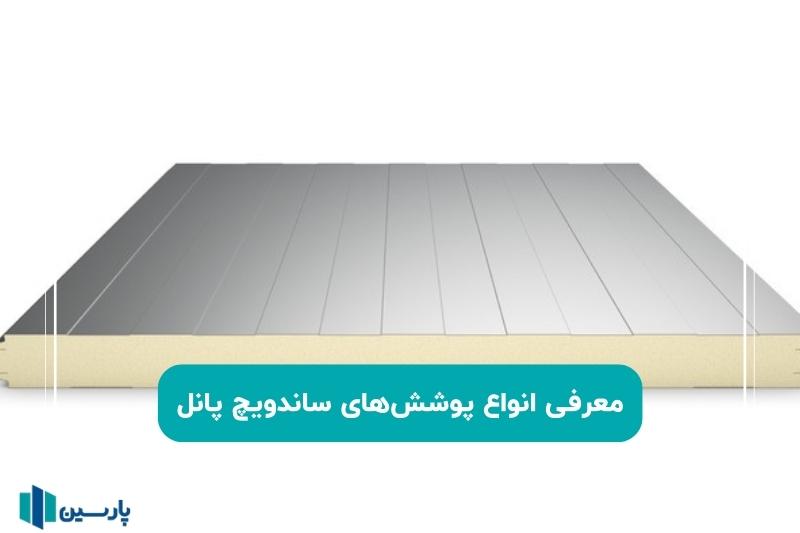
Sandwich panels are prefabricated structures manufactured using an insulating core and metal cladding, and have successfully replaced traditional materials in the construction industry. Sandwich panels are divided into various types in terms of application, and they can also be divided into various categories in terms of construction materials.
Insulation cores and sandwich panel coatings can be made from a variety of materials that are selected according to their properties and application. In this article from Parsin Gostar, we intend to discuss the types of sandwich panel coatings and their applications. Stay tuned with us.
Types of sandwich panel coatings
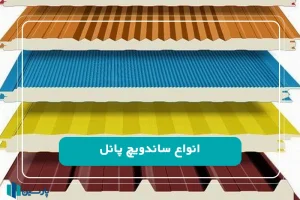
As mentioned in the introduction, sandwich panels consist of an insulating foam core and metal skins that are placed on both sides of the insulating foam. Both the insulating foams and their skins can be manufactured from a variety of materials. The use of each specific material in the construction of sandwich panels determines its application according to its characteristics. Types of sandwich panel coatings include:
Aluzinc coating
One of the most common metal sheets used to make sandwich panels is Aluzinc sheet. Aluzinc is considered one of the best choices for sandwich panel coverings due to its high strength and durability. Aluzinc is a type of sheet consisting of an alloy of zinc, aluminum, and silicon.
Panels made of Aluzinc have a very high resistance to moisture, which is why Aluzinc panels are used to insulate roofs in buildings built in humid areas. Aluzinc sandwich panels can also be used as wall panels. Another feature of this type of panel is its high resistance to acidic and chemical environments. For this reason, Aluzinc panels are most commonly used in industrial workshops and factories or humid and humid environments.
Flushing cover
One of the common coatings in the manufacture of sandwich panels for ceilings is flashing sheets. Features such as being waterproof and acid-proof make this type of panel an excellent choice for industrial environments. In addition, these panels are also used as a sealant and water seal.
Dampa cover
Dampa sheets are used in various types of ceiling and wall sandwich panels. These panels come in two types: self-colored and painted. Dampa prefabricated panels have a wide variety of designs and colors and are mostly used as prefabricated wall and ceiling panels in residential and commercial environments in the interior of buildings.
Shadowline coverage
Shadowline sheets are mostly used in the production of roof sandwich panels. The most important feature of this type of panel is its long lifespan, resistance to corrosion and decay. This type of coating is mostly used in roof panels and is an excellent option for pitched roofs in humid environments.
Aluminum cover
Another type of sandwich panel coating is aluminum coating. Aluminum coatings are very light and cost-effective. Panels made from this sheet are made in very thin thicknesses, and the high color fastness of aluminum makes it possible to see a special beauty in aluminum panels. Due to properties such as high resistance to moisture, aluminum coatings are mostly used in ceiling panels.
Galvanized coating
Galvanized sheets are most commonly used in the production of wall sandwich panels and roof sandwich panels. Galvanizing refers to steel sheets that are coated with a layer of zinc. These coatings have properties such as resistance to moisture and scratches. Galvanized panels have a long lifespan and do not corrode or rot easily. These sandwich panels are used as wall and ceiling sandwich panels in the construction of various buildings and also in clean rooms.
Composite coating
Another type of sandwich panel coating is a combination of the above coatings. The most common coating combination in the manufacture of prefabricated panels is a combination of galvanized sheet and aluzinc, each of which is used on an insulating foam. This combination is called the most popular coating for sandwich panels.
High resistance to environmental conditions such as wind and sunlight, resistance to moisture, high strength against pressure, resistance to chemicals and acids, etc. are among the prominent features of these panels, which make them suitable for use as prefabricated wall and ceiling panels.
summary
Sandwich panels are divided into different types according to the material used to make them, which differ in terms of features and applications. The choice of coating for prefabricated sandwich panels, in addition to their unique features and diverse applications, is one of the influential factors in determining the price of sandwich panels.