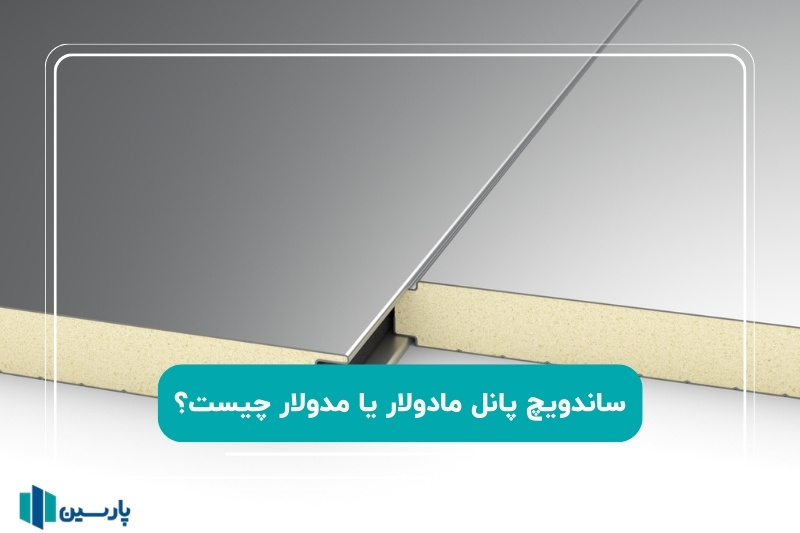
Modular Sandwich Panel is a new type of sandwich panel that is generally designed for the construction of Clean Room. This type of sandwich panel consists of a polyurethane insulation layer and steel sheets. In this article, we intend to examine the features and important points about modular sandwich panels, so stay tuned.
Modular sandwich panels or HPL sandwich panels are a new form of sandwich panels that are generally designed for the construction of various types of clean rooms. Modular sandwich panels have multiple layers consisting of polyurethane insulation, metal sheets and HPL surface. The facade of modular sandwich panels has different textures for use in the facade of various structures.
Features of modular sandwich panels
These types of sandwich panels are completely waterproof, acid-proof, antibacterial and remarkably hygienic thanks to the HPL surface. Usually, the type of HPL used in the surface of modular sandwich panels is polyvinyl chloride with a scratch-resistant UV layer.
In this sandwich panel, the insulating core is made of polyurethane and has a density of 40 kg/m2. Also, all the frames and connections are made of aluminum.
Size and dimensions of modular sandwich panels
Usually, modular sandwich panels are produced in custom dimensions according to customer needs. Also, the color and design of the HPL surface in these sandwich panels is highly varied and is selected according to the application and needs of the customer.
As their name suggests, these types of panels are modular or prefabricated, and therefore their installation is very quick and easy.
If we were to list the features of modular sandwich panels, we could consider the following:
- Proper insulation
- High resistance to moisture penetration
- Antibacterial
- Completely sterilized and hygienic
- Anti-scratch zinc
- High variety of HPL surface designs and colors
- High density polyurethane insulation
- Can be ordered in customer’s desired size and dimensions
- Thickness can be changed according to customer order.
Application of modular sandwich panels
As we mentioned at the beginning, the most important use of this type of sandwich is in the construction of clean rooms. It can also be used in various parts of the ceiling, walls, internal divisions of various rooms, medical and pharmaceutical industries, research and academic laboratory environments, etc. In fact, these sandwich panels can be used in any field that requires creating a clean and sterilized environment.
Advantages of using modular panels
Using these panels comes with many benefits in various fields, from energy savings to cost reduction. The most important benefits that can be considered for this type of sandwich panel are:
Proper insulation
The insulation used in the construction of modular panels is HPL and has high density. For this reason, these panels are considered very good insulators for both heat and cold and prevent energy loss. For more information, see the article Sandwich Panel Density.
waterproof
These panels have a special design and are connected to each other in such a way that they are completely waterproof.
Resistance to chemicals
The surface of modular panels is made of HPL sheet and is made of polyvinyl chloride with a UV anti-scratch layer. That is why such panels are resistant to the penetration of various chemicals, including acids. Their color is stable and for this reason they are considered the best choice for industrial and laboratory clean rooms.
Sterilized and antibacterial
Modular sandwich panels have self-colored HPL; therefore, they are completely antibacterial and antistatic. Therefore, modular sandwich panels are used in environments that require high pollution control.
Ease of installation
Modular sandwich panels are prefabricated and their components can be easily moved, allowing them to be installed easily and quickly at the desired location.
No need for special maintenance
Such panels usually do not require any special maintenance or repairs, other than periodic cleaning. So you will not have to pay for repairs, paint, etc.
Light and pollution free
Modular panels are lightweight and do not require pre-fabricated infrastructure, so working with them is less polluting than other similar materials.
How to install modular panels
Modular sandwich panels are placed side by side during installation and are fully connected with an aluminum connection. If additional equipment such as doors or windows are needed, they are arranged in the same way and they are also placed next to the sandwich panels and connected with an aluminum connection. In this way, no seams are created when installing these types of panels, and the structure will be completely resistant and windproof.
Since the impenetrability of these types of panels is very important, and especially in the construction of clean rooms, it is necessary that there are no seams or specific angular connections in the arrangement of these panels, it is necessary to entrust the installation of modular panels to specialists with sufficient skills in this field.
Modular sandwich panel price
The price of such panels is determined by the quality of construction and the raw materials used in their manufacture. Generally, the exchange rate has a great impact on the final price of such products, and due to the fluctuations in the currency market, it is not possible to announce an exact and specified price for modular panels. In addition, other factors such as dimensions and sizes, surface material, surface color quality, insulation density, etc. also affect the price of this type of sandwich panels.
summary
Modular or prefabricated panels are a type of sandwich panel that are generally used to construct clean rooms or clean rooms in laboratory, research, medical, and healthcare industries, etc. These types of sandwich panels have features such as being waterproof, acid-proof, scratch-proof, and antibacterial, and for this reason they can be used in any environment that requires pollutant control.
Modular sandwich panels are produced in wall and ceiling types, and their dimensions, thickness, design, and surface color are determined according to the application and customer order.
- 1 glass wool sandwich panel
- 2 sandwich panel thickness
- 3 decorative panel
- 4 rock wool sandiwch panel
- 5 what is clean room sandwich panel
- 6 acid resistant sandwich panel
- 7 types of sandwich panel
- 8 what is cold storage sandwich panel
- 9 concealed fixation joint
- 10 difference sandwich panel poly yurta poly styrene
- 11 corrosion resistant sandwich panel
- 12 aluminium sandwich panel
- 13 advantage and disadvantages of sandwich panel
- 14 fire resistant sandwich panels
- 15 what is modular sandwich panel
- 16 what is polystyrene sandwich panel
- 17 sandwich panel density
- 18 pvc sandwich panel